Teaching Jobs in Private Schools 2026 – Qualification Aur Pay
QUICK ANSWER
For Teaching Jobs in Private Schools 2026 – Qualification Aur Pay, most schools ask for a bachelor’s degree with a B.Ed preferred, and pay entry-level teachers roughly Rs 25,000 to Rs 50,000 a month, rising sharply at elite and international campuses. Hiring peaks before the session starts and again at mid-session.
THE PRIVATE SCHOOL HIRING YEAR AT A GLANCE
JAN–FEB staffing audit, quiet vacanciesMAR–APR main hiring window, session intakeMAY–JUN demo lessons, offers, probation startsJUL–AUG second wave, Karachi session intakeSEP–NOV mid-session replacement hiringDEC renewals, increments, resignations
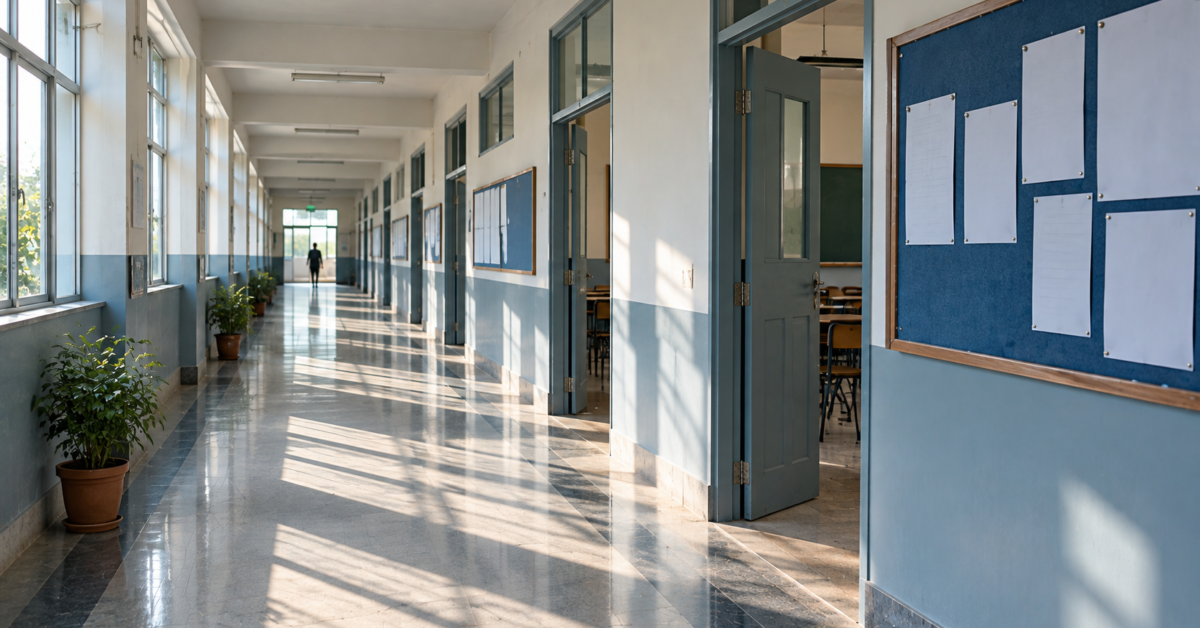
A notice board outside a school gate in early March usually carries two things: an admissions banner, and a small printed sheet asking for teachers.
That second sheet is the one almost nobody reads properly. It is also the one that explains why two equally qualified graduates end up with a Rs 22,000 offer and a Rs 55,000 offer at schools four kilometres apart.
Private school recruitment is not a random, always-open market. It runs on a calendar, and where you enter that calendar determines your qualification bar, your bargaining position and your pay. Here is how the year actually unfolds.
January to February: The Audit Nobody Sees
Nothing looks like it is happening. Internally, a great deal is.
This is when schools count heads for the coming session — projected enrolment against existing staff, which teachers have signalled they are leaving, which sections will split because a class grew. Coordinators build the gap list in these weeks.
Vacancies that appear in this window are usually quiet ones. They get filled through referrals from existing staff before any advertisement is written.
What this means for you: if you already know someone teaching at a school you want, February is the month to ask them to flag your CV internally. A referral submitted now sits at the top of a very short pile. The same CV emailed in April joins a stack of two hundred.
March to April: The Main Window Opens
For most of Pakistan, the academic session begins in spring, and this is the loudest hiring period of the year.
Advertisements go up on notice boards, school websites, Facebook pages and job portals. Large networks run rolling recruitment rather than a single drive — established school systems including Beaconhouse, The City School, Roots, Froebel’s and Army Public School hire through the year, generally asking for a bachelor’s degree with a B.Ed preferred, and placing more weight on prior classroom experience than the government system does.
This is the window where qualification is scrutinised most strictly, because the school has choice.
The Qualification Ladder Schools Actually Use
The academic route into school teaching in Pakistan runs through a bachelor’s degree followed by a one-and-a-half year B.Ed, or a four-year BS in Education taken directly.
In practice, private schools apply the bar in tiers:
- Early years and Montessori — a bachelor’s degree plus a Montessori diploma is the common ask, and for many schools the diploma matters more than the subject of the degree.
- Primary (Classes 1–5) — bachelor’s degree, B.Ed preferred, strong spoken English weighted heavily.
- Middle (Classes 6–8) — bachelor’s or master’s in the subject, B.Ed preferred, subject knowledge tested in the demo lesson.
- Secondary and Matric stream (Classes 9–10) — subject master’s increasingly expected, particularly in sciences and mathematics.
- Cambridge stream (O Level, A Level, IGCSE) — this is a separate market. Postings for these roles routinely make prior O Level or A Level teaching experience mandatory rather than preferred, and that requirement is rarely waived.
Job postings in the sector commonly stack three requirements together: a bachelor’s degree, a B.Ed, and around two years of teaching experience, with a Montessori qualification added for early-years roles. Fluency in English and basic computer proficiency appear in a large share of listings as separate line items rather than assumed skills.
The uncomfortable truth about the B.Ed: it is “preferred” far more often than it is “required” at smaller private schools. That flexibility is not generosity. It is usually what lets a school justify a lower salary band. Candidates without a B.Ed get hired — at a discount.
May to June: Demo Lessons, Offers And The Pay Conversation
Shortlisting turns into demo lessons. This is where private school hiring diverges most sharply from government recruitment.
There is no written test with a published merit formula. There is a twenty-minute lesson in front of a real class, watched by a coordinator and often the principal. Delivery, classroom control and the ability to explain one concept clearly usually outweigh what is on the degree.
Then comes the offer, and the part this article exists for.
Teaching Jobs in Private Schools 2026 – Qualification Aur Pay: What The Numbers Look Like
Private school teaching pay in Pakistan sits in bands that are wide, informal and rarely published. Education-sector reporting places private school teachers broadly in the Rs 25,000 to Rs 50,000 per month range, against government school teachers in a higher band, and international schools in major cities running from around Rs 100,000 to Rs 200,000 a month.
The spread within “private” is enormous, and it tracks three variables:
1. School tier. A neighbourhood school charging modest fees and an elite campus charging many times that are not in the same labour market, even in the same city. Elite private schools pay the highest private-sector salaries, particularly to experienced and well-qualified teachers — with correspondingly heavier workload and expectations.
2. Subject. Demand is not evenly spread. Teachers of high-demand subjects — mathematics, sciences, English and IT — can command noticeably more than colleagues in other subjects at the same school, with reported premiums in the region of ten to thirty percent in the private sector.
3. Progression. The ladder is real and it moves faster than in government service: subject teacher → senior teacher → head of department → coordinator → vice principal → principal. At the top end, a principal of a leading private school with ten to fifteen years behind them can reach a figure that no entry-level band hints at.
For context, the government comparison that shapes everyone’s expectations: a Primary School Teacher in BPS-9 is reported in the region of Rs 35,000 to Rs 50,000 a month, and a Secondary School Teacher in BPS-14 around Rs 55,000 to Rs 80,000 — before counting pension, increments and paid vacation leave.
An honesty note on these figures. Private school salaries in Pakistan are not centrally reported, and international salary aggregators produce wildly divergent numbers for the same job title because their samples are thin and skewed toward corporate employers. Treat every published range, including the ones above, as a rough orientation and verify against actual offers in your own city.
The Wage Floor Underneath Every Offer
Here is the piece almost no teaching-jobs article mentions, and it changes how you read a low offer.
Pakistan has a legal minimum wage, set under the Minimum Wages Ordinance, 1961 and administered through provincial wage boards. Since labour was devolved to the provinces, there is no single binding national figure — each province notifies its own rate, and the provincial gazette notification, not the federal budget speech, is the document that carries legal weight.
The 2026 picture, in outline:
- Punjab’s notification set the monthly minimum wage for unskilled workers at Rs 40,000, calculated on 26 working days, with a daily rate of Rs 1,538 and an hourly rate of Rs 192.
- The federal budget for 2026-27 raised the floor by Rs 3,700, a ten percent increase taking it to Rs 40,700 per month.
- Khyber Pakhtunkhwa went further in its own 2026-27 budget, moving from Rs 40,000 to Rs 45,000 and positioning that as the highest provincial rate in the country.
Two enforcement points matter to teachers directly. Deductions that pull take-home pay below the minimum wage are not lawful under provincial labour law, and employers are required to maintain wage registers that labour inspectors can inspect. Under the penalty provision of the Minimum Wages Ordinance, an employer who underpays can face a fine, imprisonment of up to six months, or both, alongside payment of the arrears owed.
Read this carefully before assuming it settles your case. The wage floor is written for unskilled adult workers in the formal sector, enforcement across Pakistan’s education sector is uneven, and many small private schools operate informally. It gives you a reference point and a complaint route — a labour inspector, the relevant authority under the Ordinance, or the Labour Court — not an automatic remedy.
What it does give you is a number to hold in your head. An offer that sits meaningfully below your province’s notified floor for a full-time, full-day position is worth questioning out loud.
July to August: The Second Wave
Karachi and parts of Sindh run on a different session start, which creates a second genuine hiring window in mid-year. Elsewhere, this period fills the gaps left by teachers who did not return after the spring intake.
Schools are more flexible here. A vacancy in August is a vacancy the school needed filled in June, and urgency moves the qualification bar and sometimes the salary band.
What this means for you: if you were rejected in April for lacking a B.Ed or the required experience, reapply to the same school in this window. The institution has not changed its standards on paper. Its situation has changed in practice.
September to November: Replacement Season
The quietest window publicly, and the most opportunistic privately.
Mid-session resignations happen constantly in the private sector — a teacher gets a government posting, a family relocates, someone leaves for a better offer. The school cannot wait for the next cycle, because a class is sitting without a subject teacher.
Roles that open now are usually offered on a shorter runway: quick demo, quick decision, immediate start. The trade-off is that mid-session joiners often inherit someone else’s class mid-syllabus.
This is also when the contract detail becomes visible. Ask, before signing:
- Is this a full academic year contract or a term contract?
- What is the probation period, and what is the salary during it? Reduced probation pay is common and should be stated in writing.
- Are summer months paid? In some private schools they are not, and an advertised monthly figure quietly becomes a ten- or eleven-month figure.
- What is the notice period on both sides?
- Is any social security registration — EOBI, or the provincial social security institution — in place? Contributions in the formal sector are calculated with reference to the minimum wage, so this question also tells you how the school classifies your pay.
- What exactly is included beyond teaching hours? Exam duty, result preparation, parent meetings and event coverage are normal. Unpaid weekend coaching presented as “school culture” is not.
Get the answers in the appointment letter, not in the interview room. A verbal assurance about summer pay is worth precisely nothing in August.
December: Renewal, Increment, Resignation
The year closes on the conversation that actually determines your pay for the following session.
Increments in private schools are discretionary rather than scheduled. There is no annual increment written into a pay scale the way there is in government service, where basic pay rises on a fixed date each year. What exists instead is a review, and reviews reward the teachers who can point to something specific.
Three things carry weight in that conversation:
- Board or exam results for your subject and section, stated as numbers.
- Retention — parents requesting you, students choosing your elective.
- Additional load you absorbed — a section you covered, a club you ran, a colleague’s classes you took during a vacancy.
December is also when resignations cluster, because teachers time their exit to the session break. If you intend to move, this is when the market has the most vacancies and the least competition — the opposite of April.
Also Read: Domicile Aur PRC Certificate Kaise Banwayen 2026 – Full Process
Where Things Stand Today
Private school teaching in Pakistan in 2026 is a market with a wide floor and a high ceiling, and very little transparency in between.
The floor is under pressure from the legal side. Minimum wage rates have moved upward across the provinces this budget cycle, and while enforcement in education remains inconsistent, the reference number a teacher can cite is higher than it was a year ago.
The ceiling has moved too, but only for a specific profile: subject specialists in high-demand areas, teachers with genuine O Level and A Level experience, and those who have crossed from classroom teaching into coordination and leadership.
The middle has not moved much. A generalist primary teacher with a bachelor’s degree and no B.Ed is competing against a very large pool, and that pool is what keeps the entry band where it is.
What to watch next:
- Provincial minimum wage notifications for 2026-27 — the federal announcement signals, the provincial gazette binds, and several provinces publish theirs weeks or months later.
- The December renewal round, which is where any wage-floor movement will show up in actual private school offers, if it shows up at all.
- Cambridge-stream demand, which continues to price separately from the rest of the market and is the clearest single route out of the entry band for a teacher willing to specialise.
- Government educator recruitment drives, because large public hiring rounds pull experienced teachers out of private schools and briefly widen opportunities for everyone left behind.
KEY TAKEAWAYS
- Private school hiring runs on the academic calendar, not continuously. March–April and July–August are the real windows; September–November is replacement season.
- A bachelor’s degree is the baseline and a B.Ed is “preferred” far more often than required — which is frequently what justifies a lower band.
- Cambridge stream is a separate market with a harder experience requirement and better pay.
- The demo lesson decides more than the degree at offer stage.
- Know your province’s notified minimum wage before you evaluate any offer, and get probation pay, summer pay and notice period in the appointment letter.
- Increments are discretionary. Build the evidence in September so you can use it in December.
FAQ
Can I teach at a private school without a B.Ed?
Frequently yes, particularly at smaller schools and in early years where a Montessori diploma may matter more. The realistic trade-off is a lower starting band and slower movement up it. Larger school networks list the B.Ed as preferred and use it as a differentiator when shortlisting.
Do private schools pay during summer vacation?
It varies, and it is one of the most common gaps between what a candidate assumes and what the contract says. Some schools pay a full twelve months, others pay only for the working months. Ask directly and insist the answer appears in the appointment letter.
Is a private school teaching job counted as experience for government posts?
Generally yes, provided you can produce a proper experience certificate from a registered institution. Requirements differ by recruiting body, so check the specific advertisement — some count only service in registered or recognised schools.
Which subjects pay the most in private schools?
Mathematics, the sciences, English and IT consistently command more than other subjects, and Cambridge-stream teaching in those areas commands more again. The premium reflects supply, not importance.
How long is the probation period usually?
Three to six months is typical, often at a reduced salary. The specific length and the probation-period pay should both be written into your appointment letter before you join.
Should I negotiate a private school salary offer?
Yes, carefully and with evidence. Bring your subject, your prior results and any relevant experience to the conversation rather than a bare number. Your leverage is highest in the replacement season, when a class is already sitting without a teacher.